2016
A group of educators and researchers in Japan come together around mixed, augmented, and virtual realities in learning, becoming a Special Interest Group of JALT.
MAVR line · 2016–2026
M10 WILLS 2025
Named on the day
Building the next chapter in collaborative immersive learning.
Applications close end of September 2026
Under 30 seats · free to attend
Departs
Sun 8 Nov 2026 · 10:00
We built these worlds for learning… Now we carry them with us.
Over the past decade, MAVR — the Mixed, Augmented, and Virtual Realities in Learning Research Group — built a world-class community exploring how emerging technology can transform learning: from AR/VR language education to metaverse meetups and an open-access journal. As MAVR sunsets, those networks don't disappear. They evolve.
Future Hub Forum 2026 is a curated, invitation-based gathering of under 30 participants where we channel ten years of relationships and momentum into what comes next. Together we will:
Eleven stops between forming as a JALT Special Interest Group and the room in Kyoto where the network reforms. Open a station to see what happened there.
2016
A group of educators and researchers in Japan come together around mixed, augmented, and virtual realities in learning, becoming a Special Interest Group of JALT.
2017
Thanks to the creation of Google Cardboard and the ubiquity of smartphones, virtual reality quickly became a viable and affordable medium for language instruction. This workshop demonstrated Google Cardboard and applications that can be used as effective learning tools in the EFL classroom.
Highlights from JALT2017 — research showcase forum, poster sessions, and an AR partnership with National Geographic Learning
2018
A showcase of the Virtual Reality Language Learning Lab (VRLLL), a VR learning environment uniquely designed to teach academic English writing structure — with demonstrations, audience participation, research on its motivating principles, and a look at the development process and future applications.
2019
A hands-on workshop on creating learning materials with three MAVR platforms: Storyspheres for interactive 360° VR tours, WallaMe for hiding augmented reality messages in the real world, and ARientation for connecting digital contents to playing cards — with tutorials followed by break-out sessions.
2020
Short presentations on innovative immersive learning research — EyesOutVR virtual presentations (Kojiro Yano), VR-based exposure training for public speaking anxiety (Josh Brunotte), ARientation augmented learning (Eric Hawkinson), VR in tourism education (Mehrasa Alizadeh & Eric Hawkinson), and language learning in VR (Dave Dolan, Veative Labs) — followed by a panel on adapting immersive technology for learning post-COVID-19.
2021
Three researchers — two at the university level and one at a public high school — building a community to develop tech skills through AR, VR, and 3D modelling technologies to enhance students’ learning in English, covering classroom technology, student workshops, and high school research projects.
2022
An online event for teachers interested in a first-hand experience of the Metaverse, hosted on Gather — a 2-D virtual environment combining teleconferencing with proximity audio and video. About 30 teacher participants explored a custom-created space, did a collaborative task in breakout areas, and brainstormed how to use Gather in their teaching practice.
2023
MAVR co-sponsored an international event bringing researchers, practitioners, and developers together to discuss the future of learning spaces with immersive technology — real-world case studies from many countries and contexts of post-pandemic learning environments, with leading experts sharing the technologies reshaping learning settings.
2024
The MAVR SIG Forum at PanSIG 2024 welcomed research-based and practice-oriented presentations on MAVR-related topics — in person in Fukui or via live and recorded remote presentations.
Insights from a Year of an Immersive Learning Laboratory In Action — Eric Hawkinson @PanSIG
Exploring Student Engagement: A Comparison of Video Conferencing and VR — Mehrasa Alizadeh
2025
WILLS invites educators, researchers, technologists, policymakers, and industry innovators to explore how immersive technologies such as AR, VR, MR, and AI can advance sustainability across education, industry, and society.
2026
MAVR sunsets at ten years. Future Hub Forum 2026 gathers the network in Kyoto to launch what comes next.
Service continues
The next stop doesn't have a name yet. That is the work of the day.
Future Hub Forum 2023 met on 16 September at the Kyoto University of Foreign Studies — the same building. It ran flip-style: participants did not come to hear research presented, they came to write it.
The question on the table was why extended reality has been so slow to take hold in ordinary classrooms. Software developers, educators and students spent the day in panel dialogues, breakout sessions and flash presentations, each surfacing an obstacle from their own practice. The method was narrative inquiry, so the evidence was the participants’ own accounts.
Narrative Inquiry into the Challenges of Implementing XR Technologies in Education: Voices from Future Hub 2023
Eric Hawkinson, Mehrasa Alizadeh, Patrizia Anesa, Roberto Figueroa and four co-authors
The report names four barriers:
It also records what those barriers do not cancel: a shared conviction that immersive technology can still change how people learn, once the four are solved.
Read the reportThe full text, plus every presentation and talk from the day.
Two of its authors, Mehrasa Alizadeh and Rob Figueroa, are organizing 2026.
We are a diverse group of researchers who are passionate about exploring and furthering research related to augmenting learning processes with emerging technology.
We respect and celebrate our diversity, in fact we see it as one of our biggest strengths. We believe everyone deserves a safe, respectful, inclusive, and aggression-free environment. But creating such an environment takes effort and an awareness of self and others. So while we expect differences in opinion and points of view, especially with regard to our research, we strive to have a community of critical yet respectful voices. In conducting research in technologies that will likely have high impact in shaping how we perceive the world and interact with others, we feel we must continually strive to a high level of mindfulness of how we interact with each other.
As part of JALT, we value and follow the JALT Code of Conduct which can be found here (Japanese translation is available here), and we expect our members to be aware of it.
Peace,MAVR team
Kyoto
Future Hub
Free
Admission costs nothing. Travel and accommodation are at participants’ own arrangement.
Under 30 seats · FHF·2026·M11
It's an unconference — the sessions themselves are pitched and shaped by the people in the room. The frame for the day:
An immersive learning laboratory at the Kyoto University of Foreign Studies — the birthplace of the Forum series, and a fitting home for this milestone.
VR headsets & AR tools for hands-on exploration
The U Theatre — a 180° immersive viewing screen
Open-plan space ideal for unconference breakout groups
Explore the Future HubGetting there
Future Hub
Kyoto University of Foreign Studies
京都外国語大学
〒615-0058 Kyoto, Ukyo Ward,
Saiinkasamecho 6, Japan
HK A short walk from Saiin Station 西院 — Hankyu Kyoto Line / Randen.

Eric Hawkinson
Forum convenor · on behalf of MAVR
Learning futurist based in northern Kyoto prefecture, focusing on games-based learning, informal learning environments, and eTourism. Eric has been innovating ways to apply augmented reality to tourism and education, and is director of interactive at TEDxKyoto.
erichawkinson.com
Mehrasa Alizadeh
MAVR co-founder
Associate professor at Otemon Gakuin University in Ibaraki, Osaka. She holds a PhD from Osaka University's Graduate School of Information Science and Technology, focused on technology-enhanced language learning. Her research covers blended, mobile and immersive learning in second language education.

Josh Brunotte
MAVR co-founder
Associate professor at Aichi Prefectural University, researching CALL and the use of virtual reality in the classroom, as well as health-related behaviors and their effect on classroom achievement.
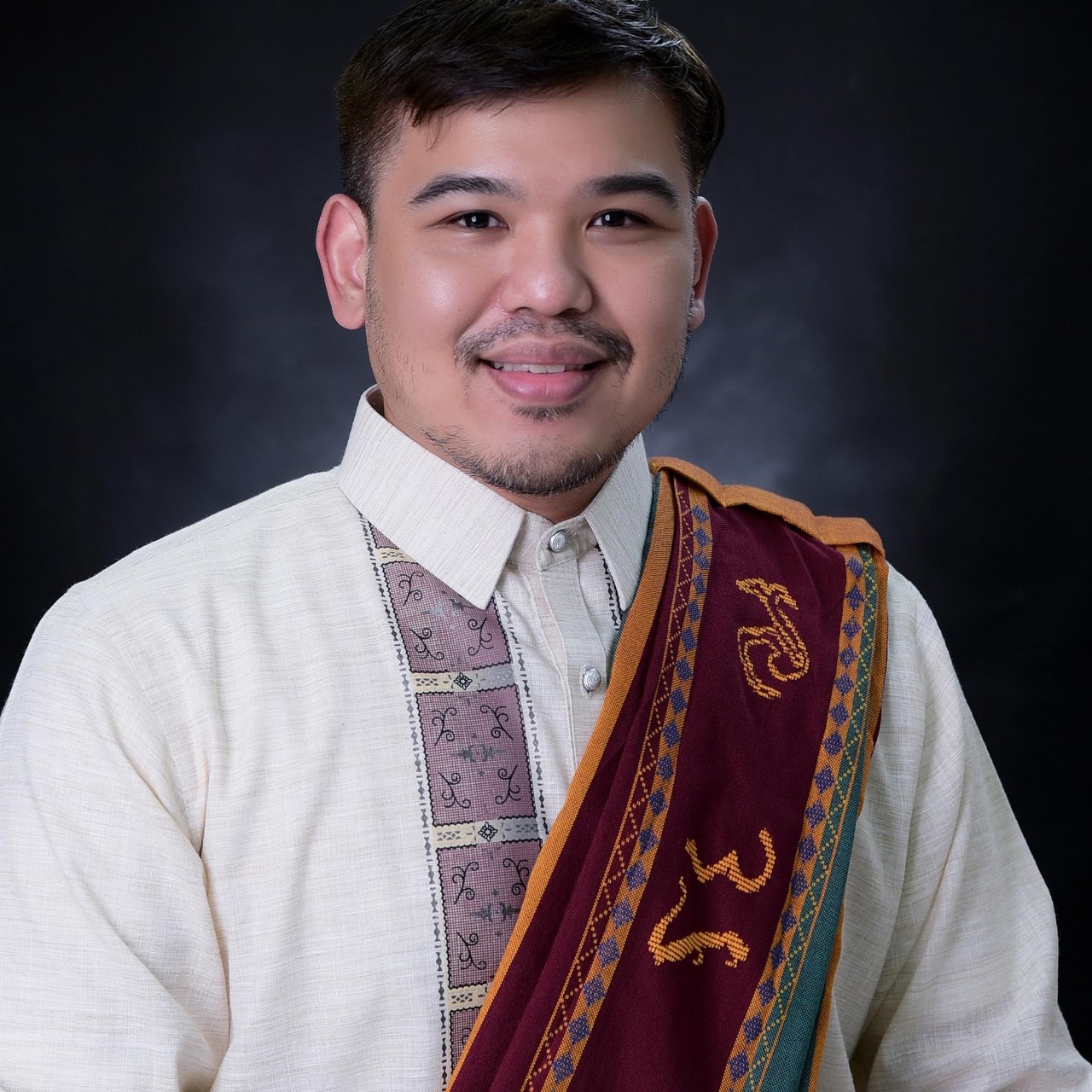
Rob Figueroa
MAVR co-founder
Dean of the Faculty of Information and Communication Studies at the University of the Philippines Open University, and lab head of ISTaR Labs. He leads the Immersive Open Pedagogies Program, bringing virtual reality, spatial computing and metaverse platforms into open and distance e-learning.

Adam Stone
MAVR co-founder
Full-time lecturer at Kyushu Sangyo University, originally from Auckland, New Zealand, with a background in fine art. His current interests are task-based learning with AR and instructional design for mobile learning.
Convened by
In partnership with





Together Learning& partners to come · partner roles to be confirmed
Attendance is by application and formal letter of invitation. The forum is deliberately small — under 30 participants — curated from the MAVR network and partner communities.
The forum is free to attend. Travel and accommodation are at participants’ own arrangement.
The forum is conducted in English.
End of September 2026. Accepted participants receive a formal letter of invitation.
A participant-driven format: instead of a fixed program of talks, attendees pitch topics on the day and self-organize into discussion groups. The timetable above is the frame — the content comes from the room.
Yes. Accepted participants receive a formal letter of invitation, which can support institutional travel approval.
Under 30 seats · applications close end of September 2026 · accepted participants receive a formal letter of invitation.
Reserve my place